

NEWS
U.S. Vape Laws in 2026: State Restrictions, Flavor Bans, and What Adult Consumers Should Know
Jun
Introduction
Vape laws in the United States are changing quickly in 2026. While there is still no nationwide ban on all vaping products, the legal market has become far more complicated than it was a few years ago. Instead of one simple federal rule, adult consumers and retailers now face a patchwork of state-level restrictions, including flavor bans, approved-product directories, licensing rules, excise taxes, and limits on certain disposable devices.
This guide explains the current regulatory landscape in a practical way. It is designed for adult consumers, vape retailers, wholesalers, and market observers who want to understand where vaping remains legal, where access is restricted, and why some products may disappear from store shelves.
This article is for general informational purposes only and should not be treated as legal advice. Vape laws can change quickly, so retailers and distributors should always confirm requirements with official state agencies before selling or shipping products.
Is There a Federal Vape Ban in the United States?
No. As of 2026, the United States does not have a nationwide law that bans all vaping products. Adult vaping remains legal at the federal level, but it is tightly regulated.
The federal baseline is built around three major rules:
First, tobacco and nicotine products may not be sold to anyone under 21 years old. Retailers are expected to verify age and follow federal Tobacco 21 requirements.
Second, new tobacco products, including many electronic nicotine delivery systems, generally need FDA marketing authorization before they can be legally sold in the U.S. market. This is commonly known as the PMTA process.
Third, the FDA maintains public lists and databases of tobacco products that may be legally marketed in the United States. For retailers, this has become one of the most important compliance tools.
The practical result is that vaping is not federally banned, but the legal market is much narrower than the total number of products consumers see online or in stores.
Why Vape Laws Feel Stricter in 2026
Many adult consumers are confused because a product can be available in one state but restricted in another. The reason is that states are using different legal tools to control the market.
The most common types of vape restrictions include:
Flavor bans: Some states prohibit the sale of flavored vapor products, especially fruit, candy, mint, or menthol-style flavors.
Product directories: Several states require manufacturers to register products before retailers can legally sell them. If a product is not listed, it may be illegal to sell in that state.
Disposable vape restrictions: Some states are considering or implementing limits on disposable or battery-embedded vape devices, often citing youth access and environmental waste.
Excise taxes: Some states apply high taxes to vapor products, which can raise retail prices and reduce product availability.
Retail licensing rules: Retailers may need specific licenses to sell electronic smoking devices, vaping liquids, or other nicotine products.
Together, these rules can make the market feel like a “ban,” even when the law does not prohibit all vaping.
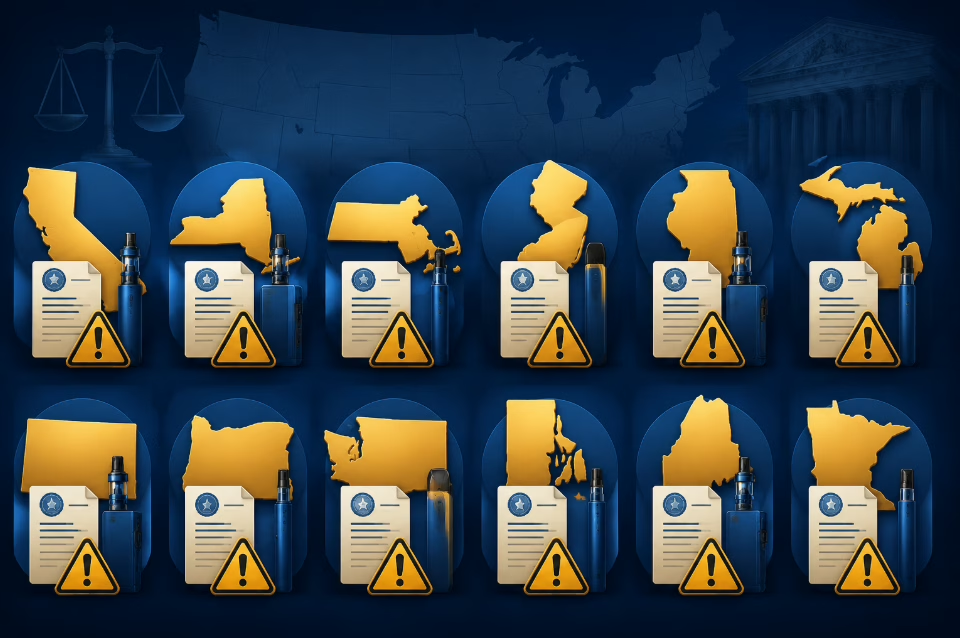
12 States to Watch for Vape Restrictions in 2026
1. California
California remains one of the strictest states for flavored tobacco and vape products. The state has already banned most flavored tobacco products, and newer rules have expanded enforcement around unflavored product lists. Retailers should be especially careful with flavored e-liquids, flavored disposable vapes, and products marketed with flavor enhancers.
California has also considered restrictions on disposable, battery-embedded vapor devices. Even where a disposable ban is still moving through the legislative process, the state’s overall direction is clear: California is moving toward tighter control of flavored and single-use vape products.
2. Texas
Texas has taken a different approach. Instead of a broad flavor ban, the state has focused on prohibiting certain e-cigarette products based on product design, contents, marketing, and country-of-origin concerns.
Under recent Texas legislation, retailers face restrictions on certain disposable vapes and products manufactured or marketed from foreign adversary countries. Products that contain substances such as cannabinoids, alcohol, kratom, kava, mushrooms, or other prohibited ingredients may also be affected. Retailers in Texas should review both nicotine and non-nicotine vape products carefully before offering them for sale.
3. New York
New York has had a statewide ban on flavored vapor products since 2020. The state continues to enforce restrictions against fruit, candy, dessert, and other flavored vape products that appeal to youth.
In 2026, New York remains one of the most difficult markets for flavored vaping products. Retailers should be especially cautious with imported disposable vapes, flavored cartridges, and products that use packaging designed to attract underage users.
4. New Jersey
New Jersey was one of the earliest states to impose a permanent ban on flavored vapor products. The state prohibits the sale and distribution of flavored vape products, including menthol-flavored products.
This makes New Jersey a highly restricted market for flavored e-cigarettes and disposable vapes. Tobacco-flavored products may still be available, but retailers need to ensure that every product complies with state law.
5. Massachusetts
Massachusetts has one of the strictest tobacco and vaping regulatory systems in the country. The state has restricted the sale of flavored tobacco products and applies a significant excise tax to vaping products.
For adult consumers, this means fewer flavor choices and higher retail prices. For retailers, Massachusetts requires careful tax compliance and product screening before stocking any vapor product.
6. Illinois
Illinois is a state to watch closely in 2026. While statewide rules may differ from local ordinances, several Illinois municipalities have moved to restrict flavored vape sales. Some local rules prohibit flavored vapes while allowing limited exceptions, such as menthol.
Retailers operating in Illinois should not assume that state law is the only requirement. City and village-level ordinances may create additional restrictions, fines, or licensing consequences.
7. Florida
Florida has focused heavily on youth-appealing products and enforcement against products that are considered attractive to minors. The state has launched a Nicotine Dispensing Device Directory that identifies products retailers must remove from inventory after they are listed.
Florida’s approach is important because it does not simply ban all vapes. Instead, it targets specific devices, packaging styles, and products associated with youth appeal. Retailers should regularly check directory updates to avoid selling listed devices.
8. North Carolina
North Carolina has implemented a vapor product certification and directory system. Manufacturers must certify products before those products can be sold in the state.
For retailers, this means product availability depends on whether a device, pod, cartridge, or consumable product appears on the approved directory. Adult consumers may see some popular products disappear from stores if manufacturers do not complete certification or if products fail to meet eligibility requirements.
9. Mississippi
Mississippi has also adopted an ENDS product directory system. Under this framework, the state maintains directories for cigarettes and electronic nicotine delivery system products, and products not included on the directory may not be legally sold.
This creates a major compliance burden for retailers and wholesalers. A product that is widely available online may still be illegal to sell in Mississippi if it is not listed in the state directory.
10. Wisconsin
Wisconsin has moved toward stricter retail rules and product limitations. Retailers must follow licensing requirements, and changes to state rules have affected which vape products can be sold legally.
The practical effect is that many products that were previously available may no longer be easy to find in Wisconsin stores. Retailers should review licensing requirements, FDA authorization status, and any state-level sales restrictions before stocking vapor products.
11. Maryland
Maryland has tightened its regulatory environment through higher taxes and additional licensing requirements for electronic smoking devices. The state has increased the sales and use tax rate for electronic smoking devices and maintains specific rules for vaping liquids and tobacco-related products.
While Maryland may not be a full “ban” state, the combination of taxes, licensing, and product rules can significantly affect pricing, retail availability, and compliance obligations.
12. Pennsylvania
Pennsylvania’s Act 57 of 2025 has become one of the most important new vape compliance rules in 2026. The law establishes a directory for electronic nicotine delivery system products and requires manufacturers to be certified with the Pennsylvania Office of Attorney General.
For retailers and wholesalers, this means purchasing from certified manufacturers and checking the official directory will be essential. Products not appearing on the directory may be subject to seizure after enforcement deadlines.
What These Rules Mean for Adult Consumers
For adult consumers, the biggest lesson is that legality depends on location. A product that can be sold in one state may be restricted in another. This is especially true for flavored disposable vapes, imported disposable devices, and products that have not received FDA authorization or state directory approval.
Before buying vape products, adult consumers should check three things:
First, confirm that the product is being sold by a licensed retailer.
Second, check whether your state restricts flavors or disposable devices.
Third, avoid products with unclear labeling, youth-appealing packaging, or no manufacturer compliance information.
Consumers should also remember that possession rules and retail sales rules are not always the same. Some laws focus on what businesses may sell, ship, distribute, or market, rather than what an adult consumer may possess. However, buying from non-compliant sellers can still create legal and safety risks.
What These Rules Mean for Retailers and Wholesalers
For retailers, the 2026 vape market is no longer a simple product sourcing business. Compliance is now a central part of inventory management.
Retailers should build a compliance checklist that includes:
Checking FDA authorization status.
Checking state product directories.
Confirming supplier documentation.
Avoiding youth-appealing packaging and cartoon-style designs.
Monitoring flavor restrictions by state and municipality.
Keeping licenses and tax registrations up to date.
Removing delisted or prohibited products quickly.
Wholesalers should also be careful when shipping across state lines. A product that is legal in one warehouse location may not be legal for sale in the destination state.
The Future of Disposable Vapes in the U.S.
Disposable vapes are under increasing pressure in 2026. Lawmakers and regulators often cite two concerns: youth access and environmental waste.
Disposable products are small, affordable, easy to conceal, and often sold in sweet flavors. At the same time, many contain batteries, plastics, and electronic components that create disposal and recycling challenges.
Because of these concerns, the market may continue shifting toward reusable, rechargeable, and better-documented devices. Retailers should expect more rules targeting disposable devices, especially products with non-removable batteries or unclear recycling pathways.
Conclusion
The U.S. vape market in 2026 is not defined by one nationwide ban. Instead, it is defined by a growing patchwork of state restrictions. California, New York, New Jersey, and Massachusetts remain strict on flavors. Florida, North Carolina, Mississippi, and Pennsylvania are using product directories to control what can be sold. Texas is targeting certain disposable and restricted-category products. Maryland and Wisconsin are tightening taxes, licensing, and retail compliance. Illinois shows how local rules can create additional restrictions even when statewide law is still evolving.
For adult consumers, the safest approach is to buy from licensed retailers and understand your local laws. For retailers and wholesalers, the key is documentation, directory checks, and constant monitoring.
In 2026, the question is no longer simply “Are vapes legal?” The better question is: “Which products are legal, in which state, under which rules?”
Leave a Reply
You must be logged in to post a comment.