


Sin categorizar
Michigan’s New Retail Licensing Law: What It Means for Youth Tobacco Use and the Vape Industry

Ene
Michigan’s New Retail Licensing Law: What It Means for Youth Tobacco Use and the Vape Industry
Michigan’s New Retail Licensing Law: What It Means for Youth Tobacco Use and the Vape Industry
By Yicho] • Updated January 2026
In late 2025, the Michigan State Senate approved a bipartisan set of bills designed to impose statewide retail licensing requirements for tobacco and nicotine products — including e-cigarettes and vapor products. The legislative push aims to curb youth access to tobacco-related products by strengthening oversight of retailers across the state.
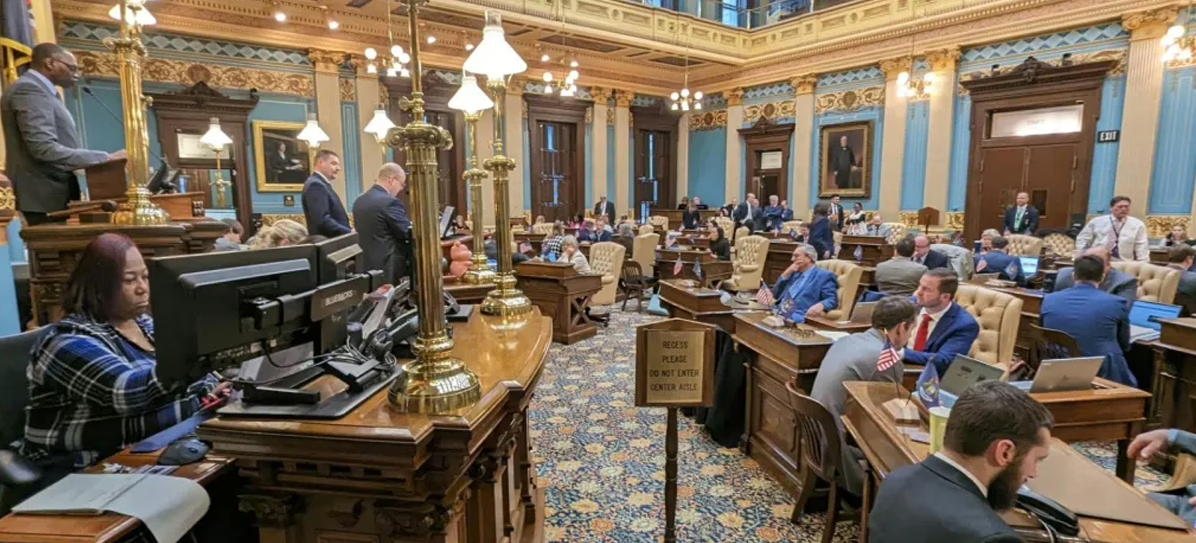
Here’s a clear, industry-focused breakdown of what the law would do, how it could impact youth tobacco use, how vape retailers might be affected, and how Michigan’s approach compares with other U.S. states.
What the Licensing Law Proposes
The core of the new legislation — primarily Senate Bill 462 — amends Michigan’s Youth Tobacco Act to require that any business selling tobacco products, vapor products, or related nicotine products obtain a state retail license before selling these products to customers.
- Mandatory state licenses for all retailers selling tobacco and vapor products, regardless of format (brick-and-mortar or delivery)
- Regular compliance inspections to ensure adherence to youth access laws
- Increased penalties for illegal sales to minors, with fines and potential license suspensions considered for repeat violations
- Regulation of online and delivery sales, including verification processes and adult signature requirements
- A dedicated Nicotine and Tobacco Regulation Fund within the state treasury to manage enforcement and licensing administration
These reforms are intended to create a uniform, statewide regulatory framework for all sellers of nicotine and tobacco products — aligning Michigan with most other U.S. states.
Why Michigan Is Targeting Retail Licenses
Supporters of the bill argue that a retail licensing system enhances enforcement of age-of-sale laws and creates accountability for vendors, which is harder to achieve without knowing exactly who and where all sellers are operating.
Public health research generally supports the concept of tobacco retailer licensing as an evidence-based strategy to help reduce youth access to tobacco products. Licensing makes it easier for authorities to track and monitor the number and location of retailers, fund compliance checks and enforcement, suspend or revoke privileges of violators, and limit sales environments that historically increase youth experimentation.
However, academic studies are mixed on the direct causal impact of such licensure laws specifically on reducing youth vaping rates. Some research indicates that e-cigarette retail licensing alone may not significantly lower youth usage without complementary efforts like education, flavor restrictions, and broader access controls.
How This Affects Vape Retailers
For Michigan’s vape sector, this legislation could bring both costs and compliance challenges.
New Operational Requirements
Retailers will need to apply for and maintain a state license, potentially with application and renewal fees. Enhanced age-verification procedures, staff training documentation, and inventory tracking will likely be expected.
Increased Enforcement Scrutiny
Licensing paves the way for regular inspections and compliance checks that go beyond current federal minimum age laws. Fines and penalties for violations may escalate, and repeated breaches could lead to sanctions or license revocation.
Potential Cost Pressure
Smaller independent shops operating on narrow margins could face financial strain from licensing fees, training costs, and compliance upgrades.
At the same time, legitimate operators that already prioritize compliance could benefit from a system that elevates industry standards and potentially deters bad actors who facilitate youth access.
How Michigan Compares to Other States
Michigan was one of the few states without a compulsory state retail license for tobacco sellers before this legislation. Across the U.S., most states already require tobacco retailer licenses, and many include vapor products explicitly in those definitions.
Several states like Oregon and Washington have comprehensive licensing systems that include vapor products and empower authorities to suspend or revoke licenses for youth sales violations. However, the specifics — such as license fees, penalties, and enforcement intensity — vary widely from state to state.
Final Analysis
Michigan’s move to require retail licenses represents a significant shift in its tobacco and vaping regulatory environment. The policy is geared toward reinforcing youth access laws, enhancing oversight, and aligning the state with broader national norms.
For vape retailers, this change means a transition to a more regulated retail landscape. Businesses that prepare for compliance now — by implementing robust age-verification systems, staff training, and clear record-keeping — are more likely to adapt successfully.
For youth tobacco and vaping prevention advocates, the licensing requirement is one piece of a larger strategy to reduce underage nicotine use, but it will likely need to be paired with education and targeted enforcement to have the strongest impact.
As the law progresses through Michigan’s legislative process and its rulemaking stage unfolds, both retailers and public health stakeholders should engage actively — shaping how licensing details are implemented on the ground.
Deja una respuesta
Lo siento, debes estar conectado para publicar un comentario.