

NEWS
Europe’s 2025 Disposable Vape Crackdown: What You Need to Know

May
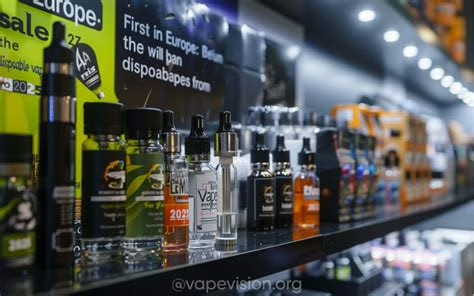
🚭 Europe’s 2025 Disposable Vape Crackdown: What You Need to Know
As of April 2025, several European countries have implemented or announced bans on disposable vapes, citing concerns over youth vaping and environmental impact. Here’s a breakdown of the latest regulatory changes:
🇧🇪 Belgium: First EU Country to Ban Disposable Vapes
Effective January 1, 2025, Belgium became the first EU nation to prohibit the sale of disposable e-cigarettes. The ban aims to curb nicotine addiction among youth and address environmental concerns related to electronic waste. (AP News)
🇫🇷 France: Ban Effective June 2025
France has passed legislation banning the manufacture, marketing, distribution, and supply of disposable vapes, set to take effect in June 2025. The law defines disposable vapes as devices pre-filled with liquid that cannot be refilled, regardless of battery type. (clearingtheair.eu)
🇬🇧 United Kingdom: Ban Commencing June 1, 2025
The UK government has confirmed a ban on the sale and supply of single-use vapes across England, Scotland, and Wales, starting June 1, 2025. The legislation targets disposable vapes, including non-nicotine versions, while allowing the continued sale of rechargeable and refillable devices. (ASH)
🇮🇪 Ireland: Comprehensive Ban Announced
Ireland has announced a comprehensive ban on the sale, manufacture, and import of disposable e-cigarettes, driven by health and environmental concerns. The legislation includes restrictions on flavors appealing to children and aims to reduce youth vaping rates. (Latest news & breaking headlines, The Irish Sun)
📊 Market Impact and Future Outlook
The bans on disposable vapes across these European countries signify a significant shift in the vaping industry. Manufacturers and retailers are expected to pivot towards reusable and refillable vaping products. Consumers may need to adapt to new devices and potentially higher upfront costs, while governments anticipate reductions in youth vaping rates and environmental waste.
For more detailed information on each country’s regulations and the broader implications for the vaping industry, please refer to the cited sources.